The narrator and Sonny’s friendship and rupture
The SympathizerThe friendship between The unnamed narrator and Sonny is a bond formed around shared revolutionary language and tested by opposing choices: one returns to fight, while the other builds a life in exile. Their reunion makes old comradeship a contest over who has remained true to the people and the revolution; its final rupture comes when The unnamed narrator, secretly an agent for the revolution, kills Sonny after Sonny refuses to believe his confession.
College Friendship and the Distance of Exile
In college, Sonny spoke with conviction about the people and the revolution. The unnamed narrator remembers those speeches as evidence of Sonny’s ideals, and later uses them to measure the life Sonny made in the United States against the future he once appeared to promise. Their old friendship therefore carries both intimacy and an unresolved political accusation: The unnamed narrator believes action should follow conviction, and assumes Sonny’s continued absence from the struggle reveals a failure of commitment.
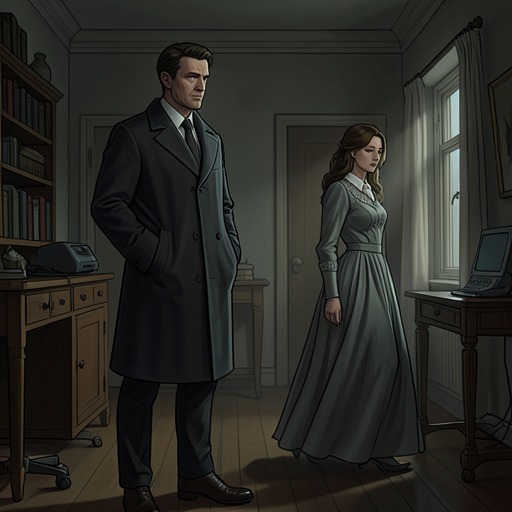
When they meet again, The unnamed narrator has been missing for seven months and has not phoned Sonny even once, sending only a few hastily written postcards. Sonny’s easy greeting and mention that he and Sofia Mori often talk about The unnamed narrator bring the distance into the room. The reunion is not a return to uncomplicated friendship. The unnamed narrator feels hostility toward Sonny, whose genial manner and apparent familiarity with Sofia make him a rival as well as an old friend.
That rivalry is sharpened by what The unnamed narrator does not know. He recognizes that Sonny may have read the feminist books on Sofia Mori’s shelves, while his own knowledge extends little beyond their dust jackets. He also admits that he had never seriously considered what women wanted. Sonny’s intellectual attentiveness thus contrasts with The unnamed narrator’s blind spots, even as The unnamed narrator tries to claim the superior position through political judgment.
The Argument About Commitment
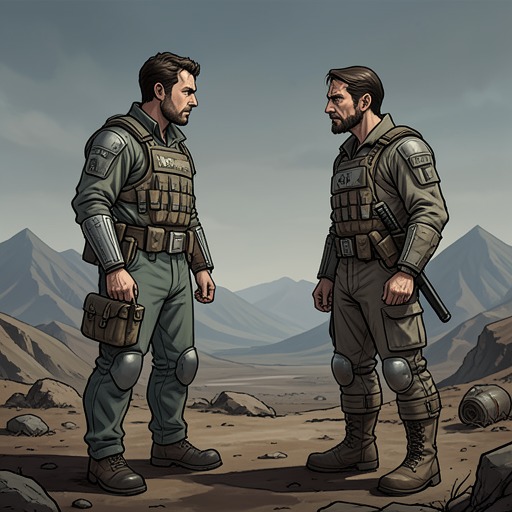
Over vodka, The unnamed narrator confronts Sonny with the discrepancy between the revolutionary speeches of their college years and Sonny’s decision to remain in the United States. He invokes Sonny’s brother Abe, who went to prison and then to Japan for his beliefs, and presses Sonny to explain whether he stays because he loves Sofia Mori or because he is afraid. The challenge treats political commitment as a test that can be measured by whether a person returns to the front line.
Sonny initially looks down, apparently ashamed, but Sofia Mori does not accept The unnamed narrator’s measure of the situation. She argues that Sonny’s home is where the people are, and that work can be done with and for them there. Sonny takes her hand and agrees that The unnamed narrator’s criticism is right. He recalls coming to the United States to study, intending to return with an American education and help his country liberate itself from the Americans. Instead, after fourteen years, he recognizes that living among a foreign people has changed him; at times, he feels foreign even to himself. He admits fear, hypocrisy, weakness, and shame, and respects The unnamed narrator for having returned to fight the cause he believed in.
The concession does not give The unnamed narrator the victory he expects. He has forced Sonny to acknowledge his failures, but Sofia Mori responds with understanding rather than turning away from him. She describes her own compromise as a secretary who smiles at a white man’s patronizing address instead of protesting. Her admission shifts the argument from a simple contrast between courage and cowardice to the compromises each person makes while living and working in America. Sonny answers that it is not too late to fight, and Sofia Mori’s focused response makes The unnamed narrator understand that she has chosen Sonny. The narrator may win the argument, but Sonny wins the audience—and the relationship with Sofia Mori is over for The unnamed narrator.
A Confession Mistaken for a Trap
Later, The unnamed narrator returns to Sonny and asks to talk about politics. Sonny speaks of wanting a child with Sofia Mori through adoption, since she is past her childbearing years. He says that he once wanted only to change the world and had not thought of changing himself; meeting Sofia Mori made him see himself as she saw him. The disclosure shows a movement toward self-examination that complicates the earlier accusation that he has simply abandoned his ideals.
The unnamed narrator’s resolve weakens as Sonny speaks. He cannot raise his right arm to reach into his bag for the gun, and begins by telling Sonny that he has something to confess. Sonny takes the confession to be about The unnamed narrator’s love for Sofia Mori. When The unnamed narrator instead asks what Sonny would think if he were a communist, Sonny rejects the hypothetical. The unnamed narrator then states that he is a communist, an ally, and has served for years as an agent for the opposition and the revolution.
Sonny does not believe him. He suspects that The unnamed narrator is trying to trick him into admitting communist sympathies so he can be killed or exposed. He interprets the revelation through the personal rivalry already established between them: The unnamed narrator is jealous because Sonny has Sofia Mori, and is trying to regain her attention by claiming a revolutionary identity. Their shared history cannot make Sonny trust the confession; instead, it supplies the explanation by which he dismisses it.
Murder and the Final Rupture
As Sonny continues to accuse him, The unnamed narrator shoots. The first bullet punctures a radio. Sonny looks toward the gun, raises a hand, and is hit; when he tries to run, another bullet strikes his back. The unnamed narrator catches up before Sonny reaches the door and fires twice into his head. Sonny falls face-first, and The unnamed narrator stands over him, seeing the blood on the carpet and the wounded palm beside his body.
The killing does not immediately feel complete to The unnamed narrator. He wipes fingerprints from his glass and uses a handkerchief on the doorknob. Hearing what may be a moan, he kneels beside Sonny and touches the exposed eye to test whether he is alive. Sonny blinks. The unnamed narrator fires once more into his temple. This final shot follows the intimacy of the test with an irreversible act: the former friend is no longer a political interlocutor or rival, but a body The unnamed narrator has made certain is dead.
The murder completes the reversal between the two men. Earlier, The unnamed narrator demanded that Sonny prove his ideals by returning to the fight; now Sonny’s disbelief prevents him from recognizing that The unnamed narrator really is an agent of the revolution. The narrator’s claim of political solidarity cannot overcome the suspicion bred by jealousy, and his violence destroys the friendship it might have clarified. Sonny’s death also ends the possibility of his calling Sofia Mori. For The unnamed narrator, the old bond survives only as the cause and memory of the act that breaks it.